

| SECTION 1: COUNTRY OVERVIEW & GEOGRAPHIC PROFILE | |
|---|---|
| 1.1 Basic Country Information | |
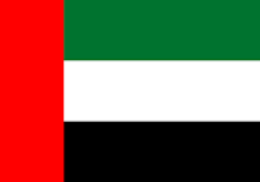
| Country Name | United Arab Emirates |
| Capital City | Abu Dhabi |
| BRICS Status | Extended Member – Joined January 2024 |
| Total Population | 9.28 million (2020 Census, FCSA); ~11.35 million (2025 est., IMF) |
| Population Growth Rate | 0.78% per annum (2023, World Bank) |
| Rural Population (%) | 12.2% of total (2023, World Bank) |
| Urban Population (%) | 87.8% of total (2023, World Bank) |
| GDP (Nominal) | USD 569.1 Billion (2025 est., IMF) |
| GDP per Capita | USD 51,348 (2025 est., IMF) |
| Agriculture’s Share of GDP | 0.7% (2023, World Bank) |
| Agriculture’s Share of Employment | ~1.3% of total workforce (2023, EU Commission/World Bank) |
| HDI Rank | 15th globally; Score: 0.94 (2025 UNDP Human Development Report) |
| Official Language(s) | Arabic (official); English widely used in business |
| Currency | UAE Dirham (AED); pegged at 1 USD = 3.6725 AED |
| 1.2 Geographic Coordinates & Physical Extent | |
|---|---|
| Total Geographic Area | 83,600 km² – Rank 114th in world |
| Northernmost Latitude | 26°25′ N (Ras Musandam, Oman exclave border) |
| Southernmost Latitude | 22°35′ N (edge of Rub al Khali / Empty Quarter) |
| Easternmost Longitude | 56°23′ E (Ras Al Khaimah) |
| Westernmost Longitude | 51°35′ E (Qatar border area) |
| Geographic Centre (approx.) | 24.0° N, 54.0° E (near Abu Dhabi emirate interior) |
| Total Coastline Length | 1,318 km (Arabian Gulf ~700 km + Gulf of Oman ~70 km + islands) |
| Land Border Length | 867 km (Saudi Arabia 457 km; Oman 410 km) |
| Number of Bordering Countries | 2 – Saudi Arabia (west/south) and Oman (east/north Musandam) |
| Highest Elevation Point | Jebel Jais, 1,934 m (Ras Al Khaimah – highest point in UAE) |
| Lowest Elevation Point | Sea level (Arabian Gulf coast) |
| Major River Systems | No permanent rivers; seasonal wadis include Wadi Al Bih (~18 km), Wadi Ham (~30 km), Wadi Shi (~15 km) |
| Major Lakes | No natural freshwater lakes; man-made: Al Qudra Lakes (Dubai), Hatta Dam reservoir |
| 1.3 Administrative Divisions Relevant to Agriculture | |
|---|---|
| Administrative Overview | The UAE is a federation of seven emirates, each with significant autonomy. Agricultural governance operates at both federal (MOCCAE) and emirate level (ADAFSA for Abu Dhabi, Dubai Municipality for Dubai). |
| Primary Division (Emirates) | 7 Emirates – Abu Dhabi, Dubai, Sharjah, Ajman, Umm Al Quwain, Ras Al Khaimah, Fujairah |
| Secondary Division (Municipalities/Regions) | Abu Dhabi: 3 regions (Abu Dhabi City, Al Ain, Al Dhafra); Dubai: 1 municipality; Other emirates: individual municipalities |
| Tertiary Division | Sectors/localities within municipalities; no formal block/commune system |
| Lowest Agricultural Planning Unit | Individual farm level – registered with ADAFSA (Abu Dhabi) or respective emirate authority |
| Special Agricultural Zones | Al Ain Region (‘Garden City’ – primary farming hub, 25,563 farms); Liwa Oasis (date palms, Empty Quarter fringe); Digdaga (Ras Al Khaimah – oldest farming area); Mleiha (Sharjah – experimental wheat farm, scaling to 1,400 ha) |
| Agricultural Development Regions | Food Tech Valley (Dubai – agritech innovation hub); ADQ AgTech Park (KEZAD, Abu Dhabi – 200 ha); ICBA Campus (Dubai – biosaline research); Agwa Cluster (Abu Dhabi – AED 90B expected GDP contribution) |
| SECTION 2: AGRO-CLIMATIC ZONES & CLASSIFICATION | |
|---|---|
| 2.1 National Agro-Climatic Zone Classification System | |
| Classification System Used | No formal national agro-climatic zone classification published; zones delineated by ICBA, ADAFSA, and academic research based on geography, rainfall, and soil |
| Total Number of Agro-Climatic Zones | 4 (Coastal Plains, Desert Interior, Mountain/Eastern, Oasis Regions) |
| Basis of Classification | Combination of rainfall, temperature, altitude, soil type, and groundwater availability |
| Reference Authority | Ministry of Climate Change & Environment (MOCCAE); Abu Dhabi Agriculture & Food Safety Authority (ADAFSA); International Center for Biosaline Agriculture (ICBA) |
Country Name
Image
Document
UAE_BRICS_Agriculture_Report_final.pdf
(961.67 KB)
Country Official Name
BRICS Status
Extended Member – Joined January 2024
Capital City
Abu Dhabi
Internal Link